
A fan can still turn even when its blades or connections need attention. Surface deterioration, exposed fibres and corroded connections justify a condition assessment. They can raise aerodynamic and mechanical concerns, but photographs cannot establish the remaining strength or identify the original failure mechanism.
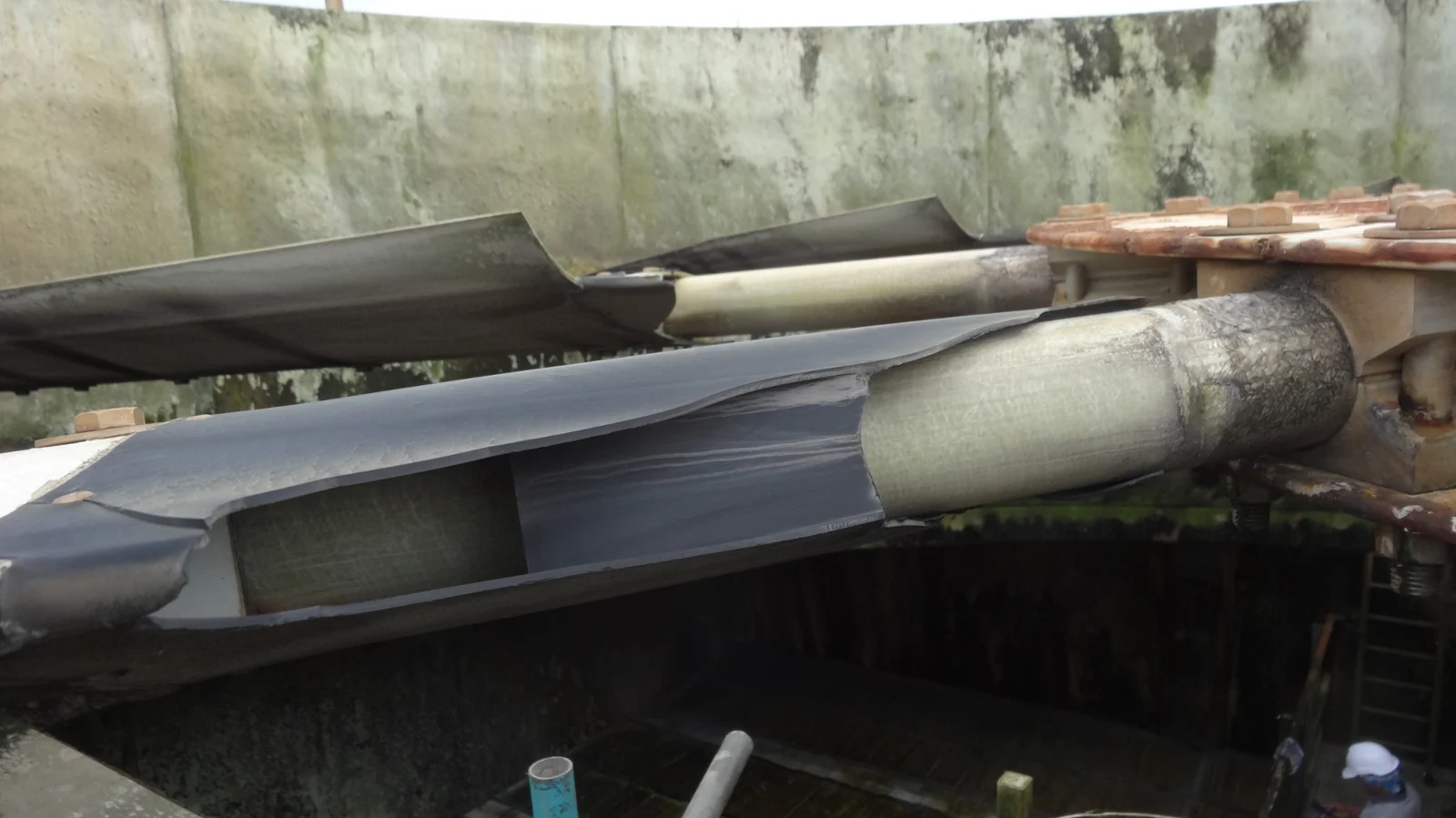
Surface damage and structural damage need different decisions
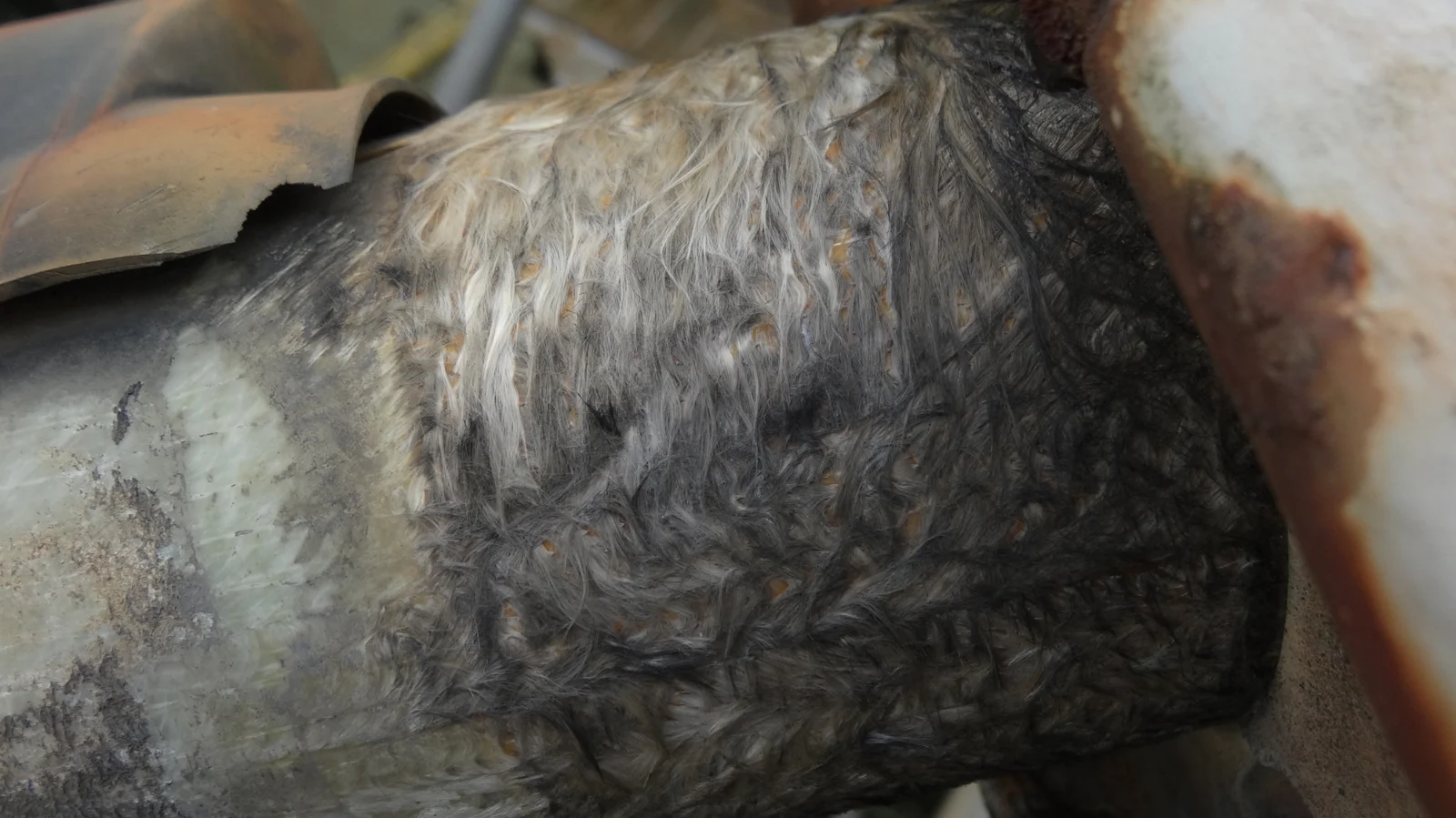
The supplied photos show lifted surface material and, in a close-up, exposed fibres. Confirm whether the affected layer is an erosion shield, coating, repair laminate or structural skin. Check the blade root, bond lines and remaining laminate. A cosmetic repair cannot be assumed adequate until the construction and depth of damage are known.
Engineering interpretation: lifted or distorted material can disturb the blade profile. Uneven damage or deposits can also change mass distribution and contribute to vibration. The effects depend on location, severity and the complete rotating assembly; a photograph is not a balance or strength test.
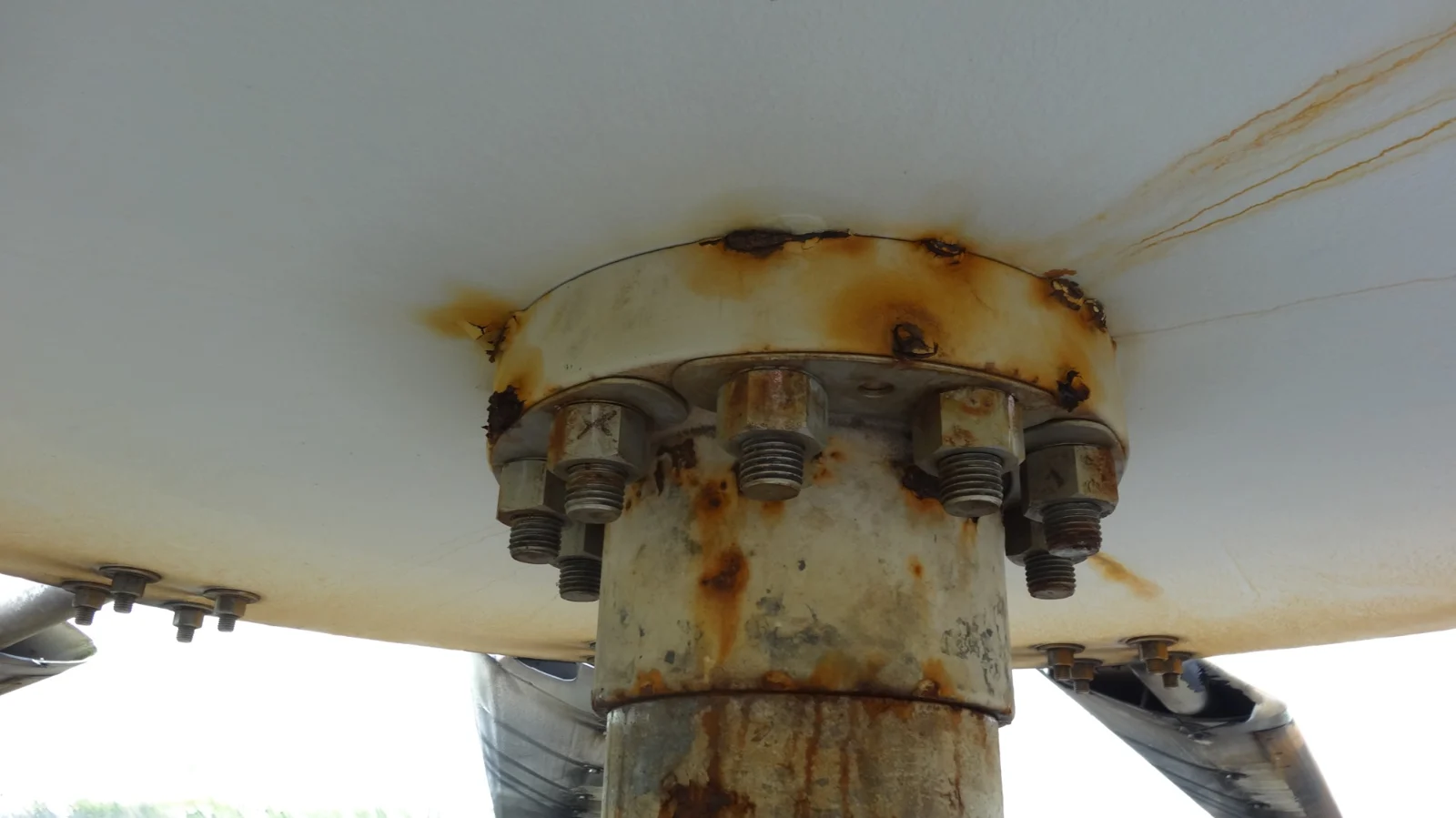
Inspect the connections, not only the blade face
Rust is visible on the central assembly and around fasteners in this photo set. Inspect for metal loss, pitting, coating failure, loose connections and damage around the attachment. Surface rust alone does not quantify remaining thickness or fastener capacity. Identify the part and inspect accessible concealed interfaces under an approved procedure.
Why the airflow and power readings matter
Blade profile, pitch, speed, tip clearance and the tower's air resistance together determine the duty. Degraded surfaces or incorrect settings may reduce airflow or efficiency. Do not assume that a damaged fan must draw more current: input power depends on its actual operating point. A motor that still runs within nameplate current does not establish blade integrity.
What to check on the fan assembly
- Identify the assembly: obtain fan model, blade construction, repair history, operating speed and the applicable maintenance instructions.
- Inspect at standstill: under isolation, examine all blades, roots, attachment hardware, supports and cylinder. Check pitch consistency, tracking and tip clearance against the manufacturer's limits.
- Decide repair or replacement: have the relevant specialist or manufacturer assess damage and compatibility. Do not substitute an unmatched blade based on length alone.
- Verify the completed work: record settings and fastener checks. Assess balancing requirements; SPX notes that replacement of individual blades may require rebalancing the complete fan [2]. Only proceed to controlled running checks after mechanical clearance for operation.
- Record operating evidence: measure vibration, speed and real input kW, and assess airflow or thermal duty where in scope. Compare with suitable baseline data and applicable limits.
If these photographs represent an assembly still in service, separated material and exposed fibres warrant taking it out of service for assessment before further operation. Do not approach rotating blades to inspect them.
Check the DE without assuming a single cause
Brentwood describes droplet erosion and corrosion from carried-over water [3]. DE condition is therefore relevant to the investigation, alongside water chemistry, age, previous repairs and operating history. Finding deterioration in both components does not by itself establish which failed first.
Manufacturer references
- SPX · Cooling Tower Fundamentals · Fan Inspection
- SPX · Fan Maintenance and Service
- Brentwood · How Drift Can Affect Your Process & Components
General engineering guidance. Photos do not establish a failure cause, remaining strength or a performance rating. Apply the installed equipment manual and actual inspection findings.